Alistair Binneyin Worcestershire
 Shutterstock
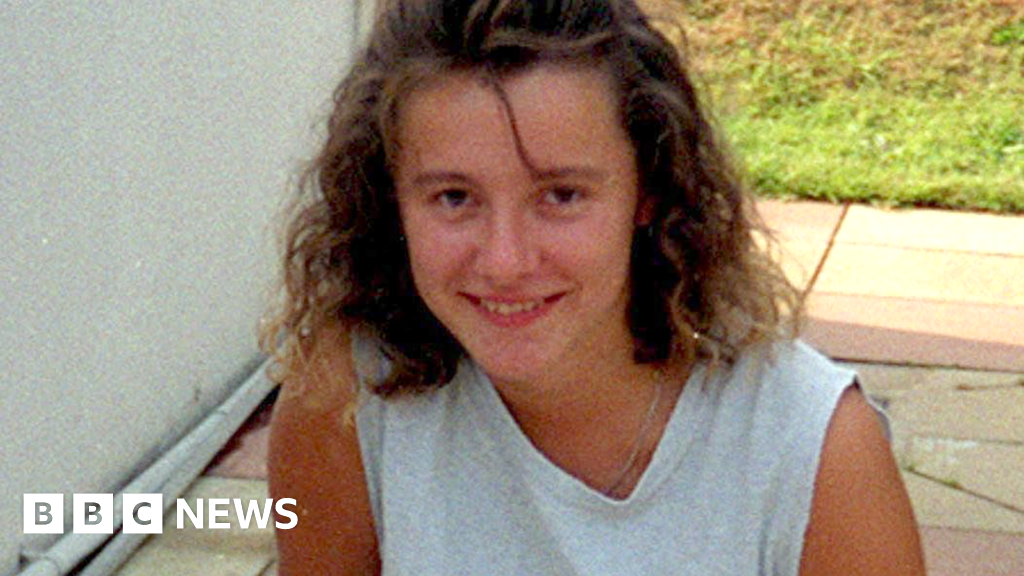
It is 30 years since a French teenager hitchhiked to the UK to visit her cousin for Christmas and vanished. Those who were close to the case talk about the lasting impact it had on them.
Celine Figard was heading to a holiday job at a hotel in Hampshire where her cousin was working as a waiter.
The 19-year-old set out to hitchhike almost 600 miles (900km) from her home town of Ferrières-les-Scey, near to the Swiss border, to Ashburn Hotel in Fordingbridge.
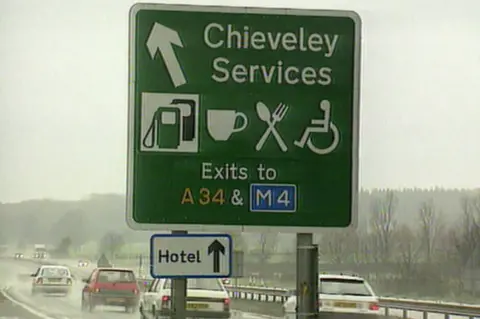
She managed to get to Chieveley Services on the M4 in Berkshire on 19 December 1995 with a French lorry driver, before accepting a lift in 36-year-old Stuart Morgan’s HGV.
She was never seen again.

Celine was reported missing by her cousin Jean-Marc Figard later that evening, sparking a nationwide hunt that gained international attention.
Her body was found dumped 10 days later in woods in Worcestershire, 90 miles away from her last sighting.
A dog walker spotted her on 29 December, on the other side of a fence in Hawford Woods, near a lay-by off the A449 near the village of Ombersley.
She had been raped, hit over the head with a heavy object and strangled.
Search for a killer
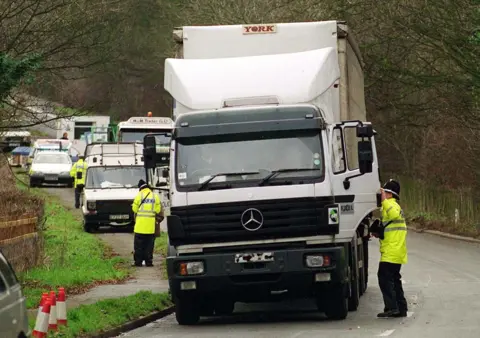
Two eyewitnesses from the motorway services had already provided police with a photo-fit of the driver of a white Mercedes lorry, saying they had seen Celine climbing into his cab before it drove off.
John Mccammont was a detective chief superintendent for West Mercia Police and took charge of the search for her killer.
“I remember virtually all my cases, but there’s never been a case that I’ve been on that’s attracted so much publicity and so much heartfelt appreciation by the public,” he recalled.
After checking with the manufacturers and the DVLA, it was discovered there were potentially 14,000 white Mercedes lorries in the UK.
So police embarked on what was then the largest DNA screening programme in the country’s history, specifically targeting drivers of those vehicles.
 Alamy
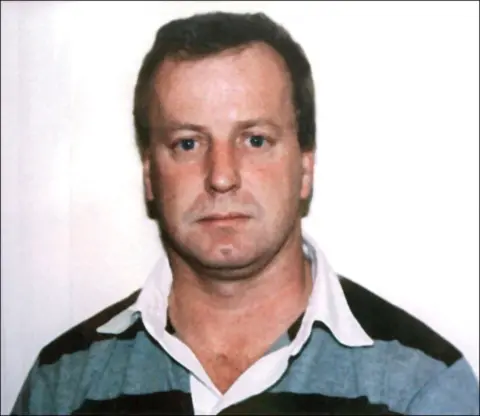
AlamyBut on the 11th test, they matched DNA left on Celine Figard’s body with Stuart Morgan, a man who had a history of problems with the law.
“He was a violent man. He assaulted a barrister with a golf club one day over a road traffic incident,” said Mr Mccammont.
“So he’d got previous convictions, at least one for violence. He was just an arrogant bloke. He fancied himself as a bit of a ladies man.”
After raiding his home, they discovered Celine’s belongings, including a camera and a box of her photos, hidden in between walls in his garage. Morgan refused to give over his lorry’s tachograph, claiming it was at the auditors.
When officers checked, it wasn’t.
 Getty Images
Further investigations found on the night Celine’s body was dumped, Morgan had driven to a factory in High Oakley, Shropshire, unplugged the fuses to his tachograph and driven back to Hawford Woods, before returning to the factory.
But he made one error – he forgot to plug his tachograph back in, leaving 200 metres of travel unaccounted for.
A search of the fields near the factory found Celine’s underwear stuffed down a rabbit hole, as well as some French coins.
Officers also found Celine’s DNA on a mattress in Morgan’s cab and discovered he’d recently bought an axe and a saw.
 Getty Images
Morgan had kept Celine’s body in his cab for 10 days while celebrating Christmas with his family at home in Poole, Dorset.
John Mccammont said there was a near-miss in finding Morgan days after he had killed Celine.
“He was pulled over by police in Yorkshire with the body in the back,” he explained.
“He got out the cab, they stopped him for speeding or a broken tail light and they gave him a telling off. But they had no reason to search his lorry.”
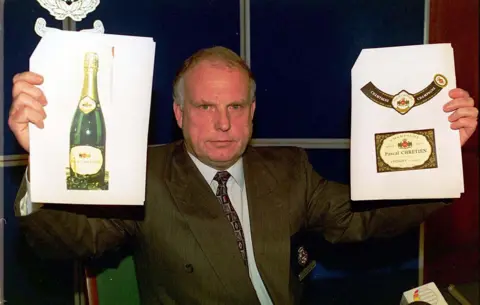
A Crimewatch reconstruction appealed to try and find two bottles of Pascal Chretien champagne that were not sold in the UK and that Celine had bought to give to her cousin.
 Alamy
AlamyA friend of Stuart Morgan, who worked at the petrol station where he kept his lorry, came forward and said he had been given a bottle as a Christmas present.
Morgan denied ever meeting Celine until the DNA on a mattress in his cab matched hers. Then he claimed they had consensual sex and he had dropped her off safely, leaving her belongings behind.
He was charged with her murder and after a two-week trial at Worcester Crown Court in October 1996, the jury took just just over four hours to find him guilty.
He was given a life sentence with the judge, Mr Justice Latham, telling him: “I consider you a dangerous man.
“What you did to Celine caused revulsion in the minds of all right-thinking people.”
 Getty Images
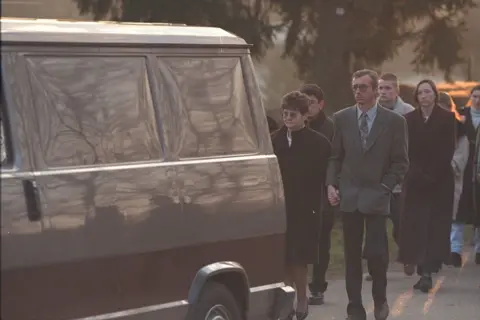
Celine’s father, Bernard Figard called Morgan “a monster”, saying he would “always be a danger to women.”
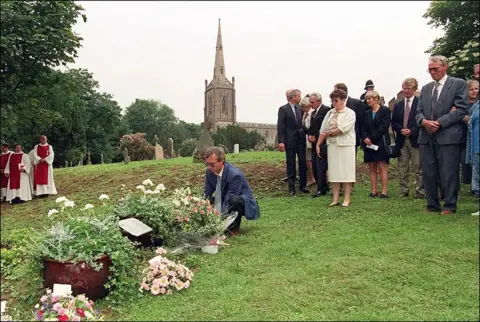
Throughout the case and trial the people of Ombersley, a village near to where her body was found, tried to be a source of comfort to Celine’s family, including her mother and father, Martine and Bernard.
Prayers were dedicated to Celine for years after her death and the family made regular visits to services.
Volunteers also dedicated a patch of land in St Andrew’s Church cemetery to create a garden named “Le Jardin de Celine”.
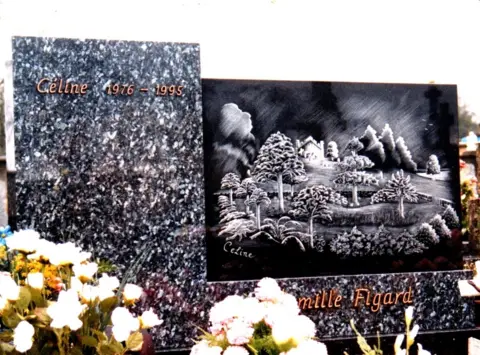
Celine’s gravestone in her home town has a sculpture depicting the Ombersley church.
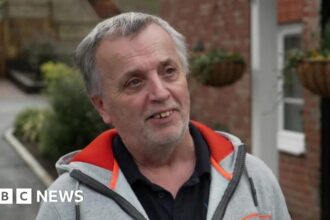
Andy Checketts was born in the village and his family ran the local butchers.
“You don’t expect a sleepy little Worcestershire village to suddenly have this traumatic national event end up on our doorstep,” he said.
“I think it was clear to the family that we were a small village, just like their own village in France, and we empathised with people coming from a rural farming background to have lost a daughter – we could easily empathise with that.”
 Anne-Laure Domenichini
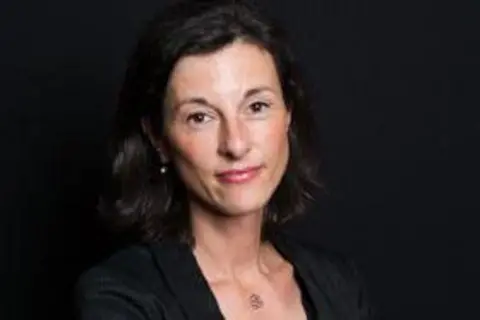
Journalist Anne-Laure Domenichini won awards for her coverage while working for West Midlands newspaper the Express & Star.
She said being a young French woman living in the UK made the case feel personal as well as professional.
“It was fairly distressing to be honest and thinking back, I’m still quite moved and also the fact it was between Christmas and New Year, probably made the whole thing more sensitive.
“The fact she was left on the side of the road like an animal, it was shocking, terribly shocking,” she added.
Ms Domenichini became close with the family after being asked to help translate and explain some of the British procedures during the case.
“It was difficult not to get involved more personally. I was sensitive and I think that made the difference,” she said.
“I wasn’t just chasing a story for the sake of it. I put a lot of myself into it.
“The fact she was a few years younger than I was – she could have been my little sister.”