
Available for over a year
RECORDING 1:
Y leveris kapten dhyworth AK Wildlife Cruises, Jake Henry y hanow, yth esa gwelyow owth ynkressya a-dreus dhe’n dhegvledhen dhiwettha, gans morviles ow tos a-varra hag ow kortos hirra.
“Ny wra dos ha bos koth, chons dhe weles neppyth dhe’n braster na a gemmer pub prys dha hwyth dhe-ves.”
Y leveris Professor Peter Evans, kevarwodher dhe’n Fondyans Seawatch – neb a hwither gwelyow, bos presens an morviles ow tevi kelmys yn ogas dhe gavadewder boos.
“An termyn meur pan viens i gwelys yw gwav, dhyworth vis Du bys dhe vis Meurth,” yn-medh ev.
An termyn na yw kehaval orth ynkressyans sesonek yn niverow hern gwynn, boos drudh.
TRANSLATION:
Jake Henry, Skipper, from AK Wildlife Cruises, said sightings had been increasing over the last decade, with whales arriving earlier and staying longer.
“It never gets old, just to see something that sheer size always takes your breath away.”
Prof Peter Evans, director of the Seawatch Foundation – which monitors sightings, said the whales’ growing presence was closely tied to food availability.
“The main period that they’ve been seen is winter, from November through to March,” he said.
That timing matches the seasonal boom in herring numbers, a favourite food.
RECORDING 2:
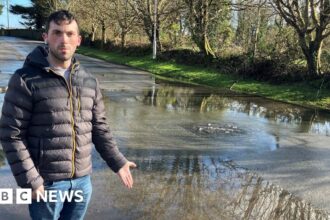
Herwydh Lesow Kembra ha Howlsedhes oberoryon a dhiskudhas orven growan yn-dann enep an fordh yn Marghas Las, Pennsans.
An diskudhans re beu aswonys avel tyller Krows Burjestra, neb a verkyas kres poran an dre.
Krows Burjestra derowel, hag a sev yn-mes a Virva ha Gwithti Pennlegh, re beu movyas rag gul spas rag ledanheans fordh yn mil eth kans naw warn ugens, hag orven growan o settys y’n fordh rag gwitha an kres istorek a wel.
Herwydh Konsel Pennsans, an grows o dhyworth mil hwegh kans ha peswardhek, pan veu delinys oryon an dre yn kylgh hanter milder dhyworth krows an marghas.
TRANSLATION
According to Wales and West Utilities workers exposed a granite marker stone buried beneath the road surface in Greenmarket in Penzance.
The find has been identified as the site of the Borough Cross, which once marked the exact centre of the town.
The original Borough Cross, which now stands outside Penlee House Gallery and Museum, had been moved to make way for road widening in 1829, and a granite marker was embedded in the road to keep the historic centre visible.
The cross dates back to 1614, when the town’s boundaries were drawn as a circle half a mile from the Market Cross, according to Penzance Council.
RECORDING 3:
An hengov nadelik orth tyller Trest Kenedhlek Kosheyl a dhallathas yn mil naw kans hwetek ha dew ugens.
Yma edhom a unn vledhen rag an argerdh dhe wul an arlont dhyworth hasa hasennow, trevasa, ha segha an bleujennow rag may fons i parys bos usyes gans rach y’n garlont, an pyth yw, dell yw usys a-dro dhe etek meter hy hirder.
Lowarther, Kay Lyle hy hanow, pennlowarther rag an kynsa termyn, a leveris “Yth esa dhyn bledhen marthys da rag tevi. Dell dybav kesunyans hav pur dha ha’n ewnbos a howl mes nyns o re lyb, an plansow a’n karas ha tevi yn niverow bras dres eghen.”
Henn yw oll ahanav vy. Seythen da genowgh.
TRANSLATION
The festive tradition at the National Trust’s Cotehele site started in 1956.
The process of making the garland needs a year from sowing seeds, harvesting and drying the flowers for them to be ready to be carefully used in the garland which is about 18m long.
Gardener Kay Lyle, who is in charge of it for the first time, said: “We’ve had a phenomenal year for growing. I think the combination of a really good summer and that nice balance of sun but not too much wet, the plants loved it and grew in massive numbers.”
That’s all from me, have a good week.
PRESENTER: Thank you – this week’s An Nowodhow was written and read by Kensa Broadhurst and the editor was Wella Morris.
Pic: Saltash by Cita.