
 Hampshire Fire
A rural fire station in Hampshire was unavailable to attend callouts 93% of the time over a one-year period (2022), new figures have revealed.
A BBC freedom of information request also showed one-in-five retained fire stations were unavailable for more than half of the year in 2024.
Regional Secretary of the Southern branch of the FBU, Mark Chapman, said “the public would be surprised and should be concerned” by the “shocking” statistics.
The government has said it “understood the challenges” and was increasing funding for fire authorities by an average 3.6%.
The vast majority (85%) of fire stations in Hampshire and the Isle of Wight are crewed by on-call firefighters, not full-time staff who are called out when there is an incident.
But there are times where not enough crew are marked as available so the appliance cannot be deployed.
The freedom of information request showed unavailability data for all Hampshire and the Isle of Wight’s retained fire stations for the three years 2022-2024.
The fire stations with low availability are all in rural villages or small towns, including Grayshott, Sutton Scotney and Stockbridge.

 Hampshire Fire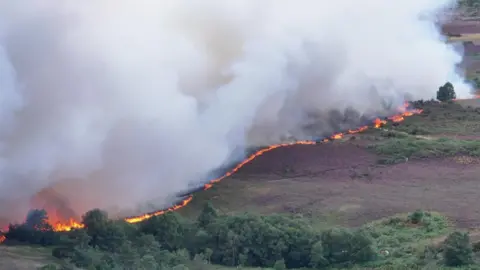
Mark Chapman said it was not uncommon for only 19 of the Hampshire forces 80 plus fire engines to be available for deployment.
He added retaining and recruiting crews was particularly difficult since the pandemic in rural areas because of house price rises.
“The demographic has changed significantly and the people we would normally recruit, the plumbers, the electricians, the gas fitters are no longer living in those areas”.
In July, the Petersfield appliance was unavailable to respond to a fire in a flat in Lavant Street, with the nearest alternative taking nearly 18 minutes to attend.
The FBU say in that time it had spread to more properties.
Chief Fire Officer, Sabrina Cohen-Hatton said public safety was always the primary concern but added “The brigade is facing significant financial challenges due to underfunding and the Government needs to increase the funding it provides to carry out their vital role in keeping communities safe”.
She said they’d introduced more flexible contracts to try and encourage more applications for retained crew.
In Dorset, Swanage fire station was almost never recorded as unavailable.
But in some more rural parts of the county, the fire appliance was often unavailable more than half of the time because of a lack of crew.
Val Hampshire, the executive council member South West for the FBU said the lack of crews meant incidents like the Holt heath wildfire in August had needed support from crews as far away as Merseyside and Lancashire.
She added working conditions was affecting retention.
“The pressure of the job, the fact they don’t have enough crew, they don’t get breaks, they have to work twice as hard for twice as long at incidents, there’s the danger element, the time it takes to get to the incident pulls moral pressure on the crews, all of those things affect morale”.
Dorset and Wiltshire’s fire chief, Andy Cole, said the service had undergone a review to make sure “resources were in the right place based on need” and had increased its investment in wholetime (full time) crew to give the best coverage.
He agreed fire services were facing “significant financial challenges”.
A spokesperson for the Ministry of Housing, Communities and Local Government (MHCLG) said it “understood the challenges fire services are facing”.
It said standalone fire and rescue authorities would see an increase in funding this financial year.
For Hampshire and Isle of Wight – £99.8m for 2025/26 which is a 3.5% increase on 2024/25.
In Dorset & Wiltshire – £74.9m for 2025/26 which is a 3.3% increase.
Those figures are below the national average increase.