
 BBC
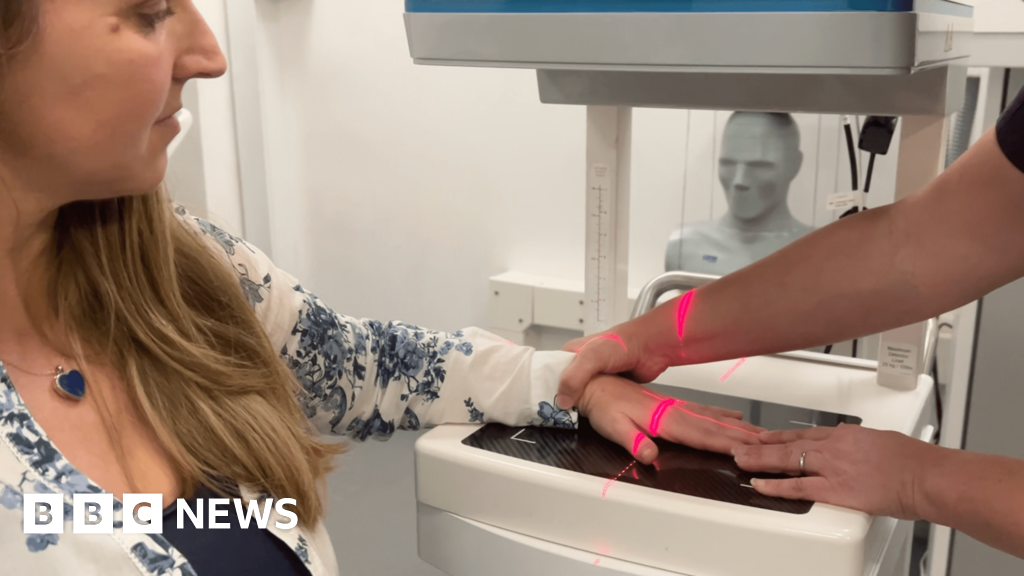
BBCA woman will be the first person in the UK to trial new 3D imaging technology designed to give earlier diagnosis of diseases like rheumatoid arthritis, a university has said.
Emma Carnell, 45, from Exeter, Devon, was on holiday in Corfu in July when she began having pain in her hands, shoulders, and knees.
Initial tests carried out when she returned to the UK showed negative results for rheumatoid arthritis, but Ms Carnell’s doctor ordered an ultrasound which confirmed the diagnosis, she said.
She is now taking part in a trial at the University of Exeter using new 3D imaging technology developed by Adaptix, which provides more detailed images.

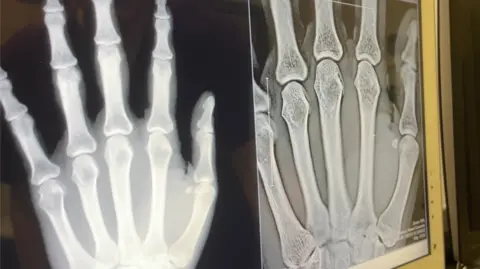
It is the first live trial of the portable imaging technology, which offers 3D imaging at a similar cost and radiation dose to traditional 2D X-rays, according to Karen Knapp, professor of musculoskeletal imaging at the University of Exeter.
Ms Knapp said the new technology, called AdaptixOrtho350, could help avoid permanent damage to joints by detecting diseases like rheumatoid arthritis at the earliest stages.
It works by creating 3D images from a stack of image slices, much like CT and MRI imaging, but with a lower radiation dose compared to CT, faster imaging, lower power requirements and a compact size, she added.
University experts said rheumatoid arthritis – an autoimmune condition in which the body’s immune system mistakenly attacks its own tissues, causing pain, swelling, stiffness and permanent joint damage – affected about 18 million people worldwide.
 Emma Carnell
Ms Carnell said she thought the pain she experienced on holiday was initially a trapped nerve.
She said: “I then had extreme fatigue and just felt generally unwell, and thought I’d maybe picked up a virus, or that it could be the menopause kicking in.”
Ms Carnell, who is a company secretary, was referred to the rheumatology department at the Nightingale Hospital in Exeter.
An ultrasound confirmed she had thickening of her joint lining and excess fluid in her joints – leading to a diagnosis of rheumatoid arthritis.
She said the disease was not curable, but early detection and subsequent treatment could prevent irreversible joint damage and help to manage the symptoms.
“I am so lucky I listened to my own body and I knew something wasn’t right. I’m lucky that my GP was amazing, and then the rheumatology department in the Nightingale were amazing, they moved really quickly.”
Ms Carnell said she wanted to be part of the trial to help any potential patients in the future.
The study is being conducted with support from the Royal Devon University Healthcare NHS Foundation Trust with participants recruited from the rheumatology service and support from NIHR Exeter Biomedical Research Centre.
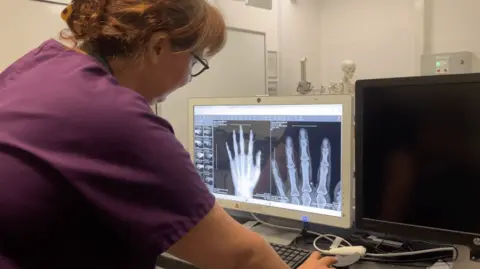
Ms Knapp said up to 50% of people with early joint changes due to rheumatoid arthritis were missed when diagnosed using 2D X-rays.
She said: “We’re really excited to be the first to trial the new Adaptix Ortho350, which promises much better visualisation of bone and joints than traditional 2D images.
“This trial is an excellent example of a partnership between our university and industry directly benefiting patients.”
Dr Siân Phillips, chief medical officer at Adaptix, said: “Our technology is already in use across both the veterinary and non-destructive testing sectors, and has delivered positive results in cadaver trials.
“The Exeter trial marks the next stage in our journey with the first live human trials.”