Rhiannon Yhnelland
Pippa Rifka,Somerset
 BBC
BBCSome people living with motor neurone disease (MND) are dying before they receive financial support to adapt their homes, families have said.
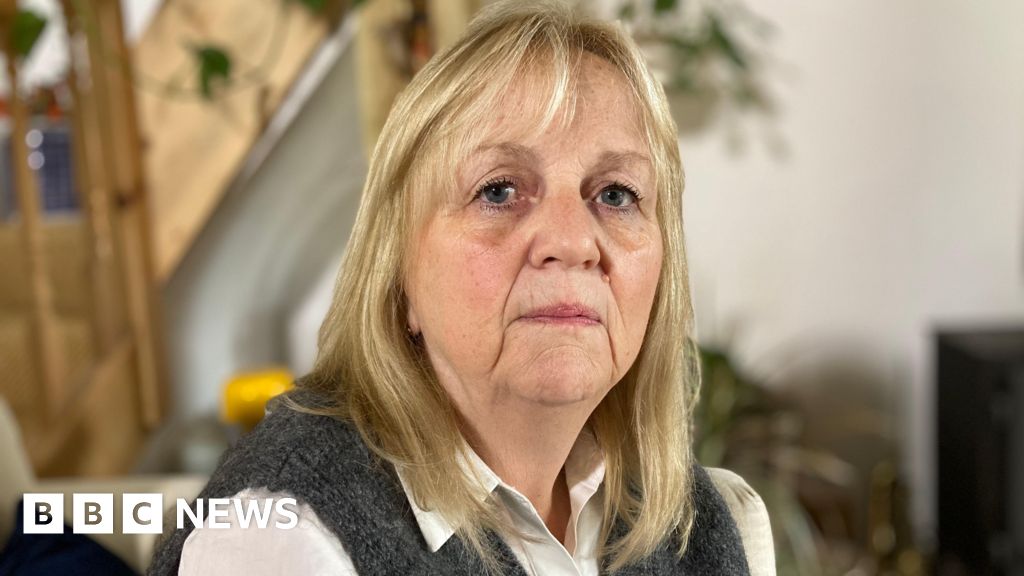
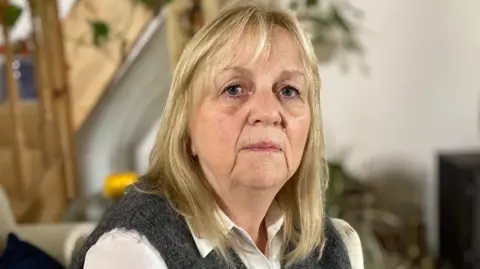
Nicky Jones, 65, from near Frome in Somerset, said it is currently a postcode lottery and she has given up waiting after being diagnosed with the degenerative condition in May.
Her daughter Katy Wyatt said: “When we’ve gone onto the MND forums we are seeing lots of people waiting from six months to two and half years. Some people have already died while waiting, so the help hasn’t got to them.”
Somerset Council said it prioritises people who were “at highest risk” to get through the grant process “as quickly as possible”.
The MND Association reported that the time required to complete home adaptations has increased by 13% nationally over a three-year period, with the average waiting time rising to more than a year by 2023/24.
Alex Massey, the charity’s head of campaigning, policy and public affairs said people risked “being trapped in their own homes”.
“We are talking about a condition where sadly a third of people will die within a year and around 50% within two years,” he added.
MND affects nerves in the brain and spinal cord, which tell your muscles what to do. This leads them to weaken and stiffen over time and usually affects how you walk, talk, eat and breathe.
Ms Jones, who previously worked in a hospice supporting other people with MND, tried to apply for financial support under the Disabled Facilities Grant (DFG) to make changes to her son’s home.
But she said the process was “awful”.
Ms Jones said: “I’d like to get the policy changed, it is a postcode lottery considering where you live, what you get, and what you don’t get.”
The DFG is designed to help disabled people make essential changes to their homes to maintain their independence.
Funding is given by the government to local authorities to distribute.

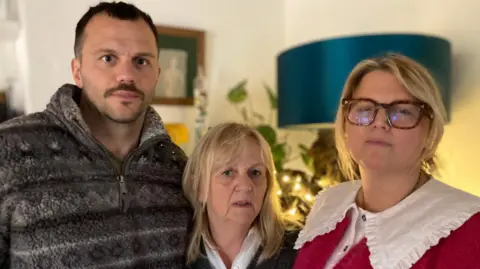
Ms Jones said she wanted to use the grant to convert her son’s garage to incorporate a bathroom and bedroom area.
She said: “That grant would have helped to make life a bit easier.”
She submitted her application in September, but withdrew from the process in November.
“I can’t fight this battle for myself anymore, but hopefully we can fight it for other people to make a difference,” she added.
Somerset Council spokesperson said financial assessments are conducted to determine if those applying are eligible.
The authority also considers if they are living with a degenerative conditions.
“This ensures that they move through the grant process as quickly as possible to get the adaptations they need,” they added.
The government has been approached for a comment.