 Cynthia Dallow
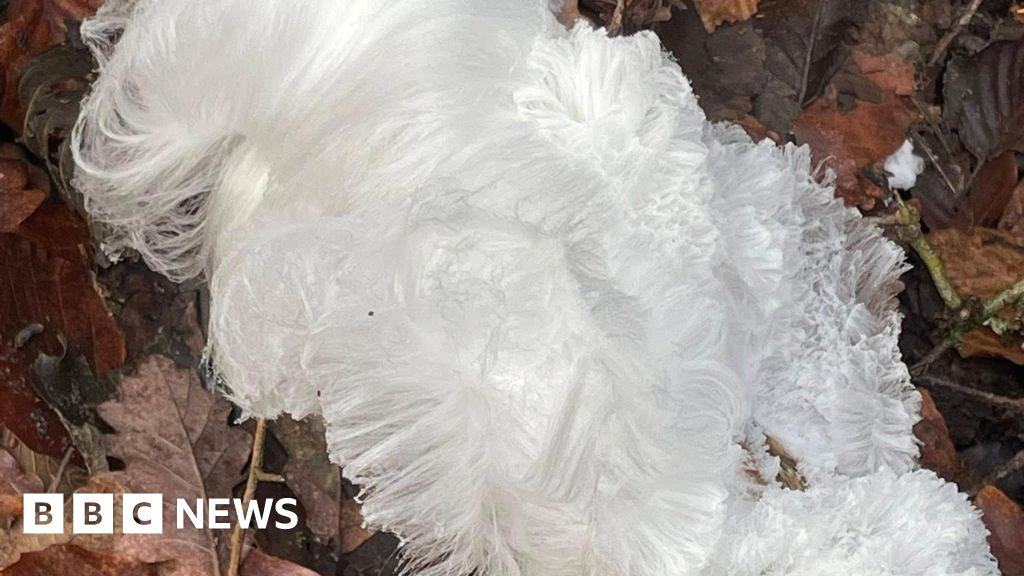
Rare candy floss-like ice formations known as hair ice have been spotted in woodlands.
The phenomena was discovered by walker Cynthia Dallow in the Forest of Dean, Gloucestershire, on Wednesday and by a visitor to Wimbleball Lake on Exmoor, Somerset, at the weekend.
The rare-type of ice only forms on rotting wood in below zero temperatures at latitudes between 45°N and 55°N, according to the Met Office.
Ms Dallow said: “I thought it was a piece of rubbish in the ditch at first because it’s really white and I got really cross, but it is rather magical.”
Ms Dallow said she was walking in the Forest of Dean near Wenchford when she made the discovery.
“It was quite a big clump on a dead stick, five inches (13cm) wide and up to 10 inches (25cm) long,” she said.
“It looked so delicate and just beautiful but you couldn’t touch it because it would just collapse.”
She said it was a “pretty incredible organism” but it “doesn’t last very long”.
“You have to catch it at the right moment, with the perfect conditions,” she added.
“It disappears really quickly depending on the air temperature, so I do feel chuffed.”

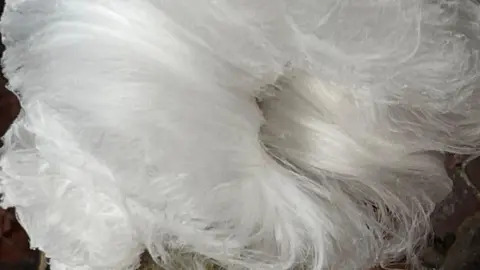 Cynthia Dallow
In Somerset, South West Lakes said a visitor to Wimbleball Lake made the same “amazing discovery”.
A spokesperson said the “stunning delicate formation”, also known as frost beard, was spotted at the weekend.
“It’s a fleeting phenomenon and a rare spot,” they said.
“A true winter treasure.”