Ros TappendenSouth of England
 Allan Cummings
Seal pups and jellyfish-like creatures are among the wildlife washed up on Dorset’s beaches during storms this week.
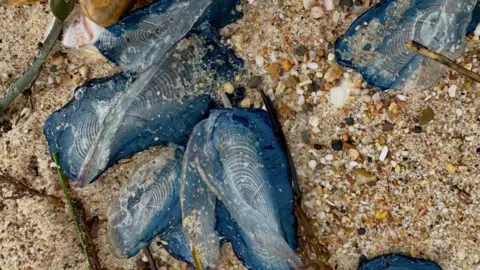
Thousands of by-the-wind-sailors – organisms carried by ocean currents and the wind – were reported in Poole Bay and Kimmeridge.
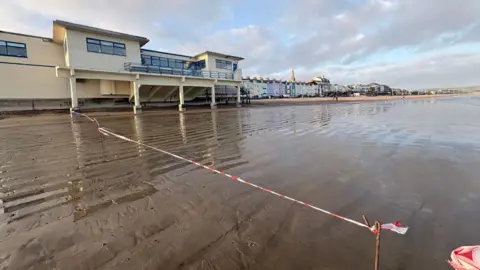
Seal pups have also been washed ashore in recent days, with part of Weymouth beach temporarily cordoned off on Wednesday to ensure one of them could return to the sea, undisturbed.
So what happens to marine wildlife when there’s a storm and why do creatures end up on our beaches?
British Divers Marine Life Rescue (BDMLR) said it had received reports of eight seals needing assistance since the start of December.
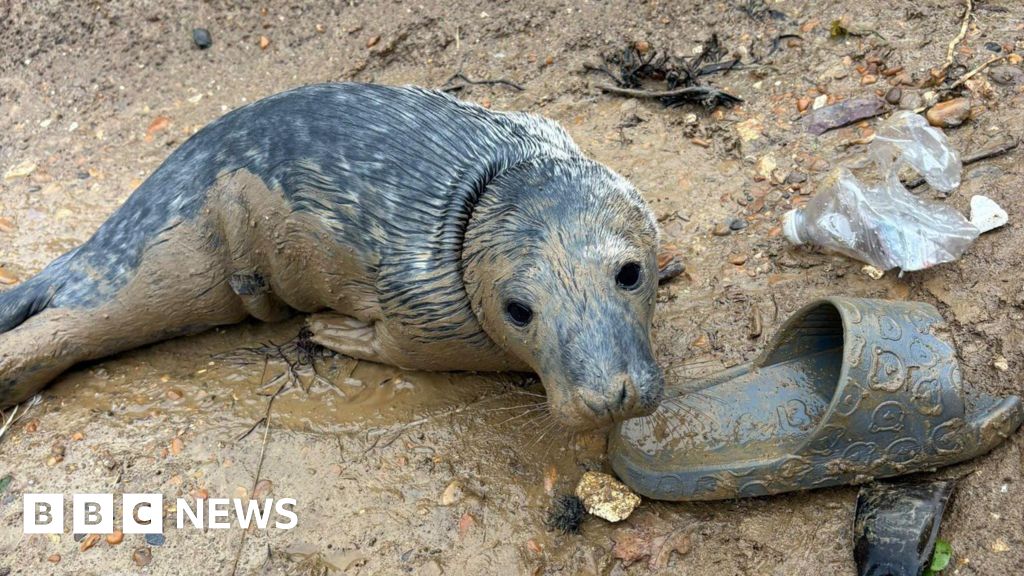
On Monday, a member of the public reported another tiny seal pup amongst piles of rubbish at Seatown.
The charity said the seal was found “underweight, exhausted and surrounded by debris with nowhere safe to rest”.

 Weymouth Town Council
It was taken to RSPCA West Hatch Animal Centre in Somerset for rehabilitation and will eventually be released back into the wild.
A BDMLR spokesperson said: “After storms and high tides, seals often haul out to rest, digest and recover.
“For very young pups, rough seas can also separate mother and pup or displace pups from sheltered pupping areas.
“In many cases, the mother is still nearby and will return to feed when undisturbed.
“If there are disturbance issues, the mother may abandon the pup altogether.”
The charity said its approach was to reduce disturbance and monitor pups until they were united with their mothers.
But it said if they were unwell or repeatedly approached by people and dogs and there was no sign of their mother, they may rescue the pup for veterinary care and rehabilitation.
 Lime Tree Communications
Some dog walkers expressed concern after discovering hundreds of by-the-wind-sailors washed up on beaches after Storm Bram.
Sarah Hodgson of Dorset Wildlife Trust said: “By-the-wind sailors are usually found out in the open ocean. They live on the surface of the sea, travelling with the currents and using their sail-like structure to drift with the wind.
“It’s not unusual for mass strandings to occur after rough and stormy weather, where the strong winds push them closer towards the coast.
“Although they only have a very mild sting, we would still recommend that people just look but don’t touch if they find any.”